

By opting in you agree to receive emails from us and our affiliates. Your information is secure and your privacy is protected.
Latest News
11-02-2026 00:03
2 Views
DOJ signals crackdown on synagogue protesters using abortion clinic statute
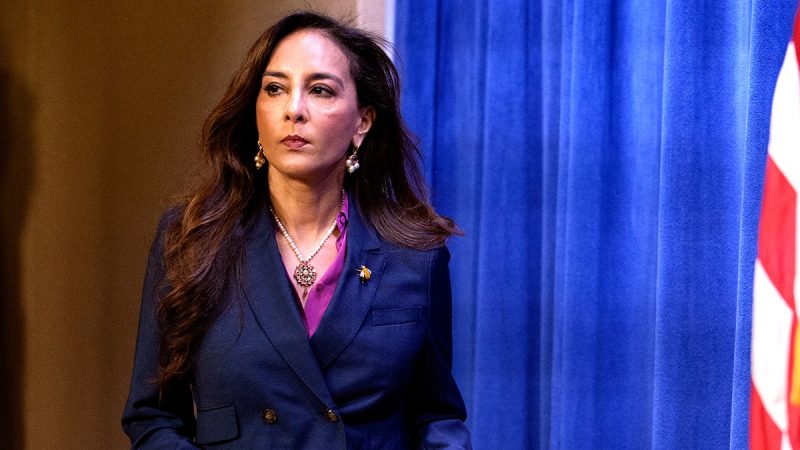
The Justice Department is signaling a broader use of federal civil rights law against protesters accused of disrupting religious worship, with officials pointing to synagogue cases as a model for future enforcement.
Assistant Attorney General Harmeet Dhillon, who leads the Justice Department’s Civil Rights Division, said the department has applied the Freedom of Access to Clinic Entrances (FACE) Act — a law historically associated with abortion clinic protests — to cases involving disruptions at Jewish houses of worship.
‘It was our pioneering application of the FACE Act to defend Jewish synagogues that paved the way for its use to defend churches,’ Dhillon said during remarks at an antisemitism and extremism conference at George Washington University Tuesday, describing the enforcement approach as a way to draw clear legal lines between protected speech and unlawful conduct.
The FACE Act makes it a federal offense to use force, threats of force or physical obstruction to intentionally interfere with individuals because they are exercising their right to religious worship or to an abortion. Dhillon said the statute allows federal authorities to intervene when protests cross into obstruction, intimidation or trespass at places of worship.
Dhillon cited a civil lawsuit filed by the Justice Department against protesters accused of disrupting services at a synagogue in West Orange, New Jersey, calling the case a first-of-its-kind application of the law in that context. She said the department is also reviewing similar incidents elsewhere and warned that additional enforcement actions could follow.
According to Dhillon, the Civil Rights Division has shifted toward more aggressive enforcement in response to a rise in antisemitic incidents since the Oct. 7, 2023, Hamas attacks on Israel, including harassment, vandalism and disruptions of religious services.
‘Antisemitism is an American problem, not a Jewish problem,’ Dhillon said. ‘It strikes at the heart of who we are as a nation.’
She argued that allowing unlawful conduct targeting one religious group risks eroding civil rights protections more broadly, adding that the department’s approach is meant to protect all faith communities.
Beyond the synagogue protest cases, Dhillon pointed to a series of recent Justice Department actions addressing antisemitism, including major settlement agreements with Columbia University and Northwestern University to resolve federal investigations into alleged discriminatory environments, as well as civil litigation against an Oakland, California, coffeehouse accused of refusing service to visibly Jewish customers.
Dhillon also cited federal hate crime prosecutions tied to violent antisemitic attacks, saying the department is moving quickly in cases where evidence supports criminal charges.
While emphasizing that lawful protest remains protected under the First Amendment, Dhillon said physically blocking access to religious services, trespassing on synagogue property, or defying lawful police orders fall outside constitutional protections.
‘We are not just reacting,’ she said. ‘We are proactively defending the freedoms that make this nation exceptional.’
This post appeared first on FOX NEWS
Other news